Antisamos Beach Kefalonia: The Cave Day's Swim Stop
Every cave visit ends with the same question: where do we swim afterwards? On Kefalonia the answer most people arrive at is Antisamos. It is the beach the cave day-trips themselves finish at — the local operator based in Sami runs a Thursday excursion that does Melissani, Drogarati and then this bay — and it is on the same side of the island as the caves, on the calm east coast rather than the exposed west.
The case for it is easy to state: flat, clear water that is comfortable to swim in rather than dramatic to look at. The honest caveat belongs at the top of the page too, though, because it changes what you pack. Antisamos is pebble, not sand, and the water deepens steadily off the stones instead of shelving gently for metres. Know that before you go and the afternoon is straightforward; discover it on arrival and it is a long walk back to the car.
🏖️ Antisamos at a glance
- Where: the east coast by Sami, the same side of the island as Melissani and Drogarati.
- Underfoot: white pebble and shingle. Water shoes earn their place here.
- The water: the calmest proper swim on the island, and it deepens steadily off the stones.
- Getting there: no bus service at all. Drive, take a taxi, or join a tour that stops here.
- Best pairing: caves in the morning, beach in the afternoon, with the Melissani ticket discounting Drogarati.
- Cost: the beach itself costs nothing. The cave tickets are the only fixed spend.
Why the east coast is the calm side
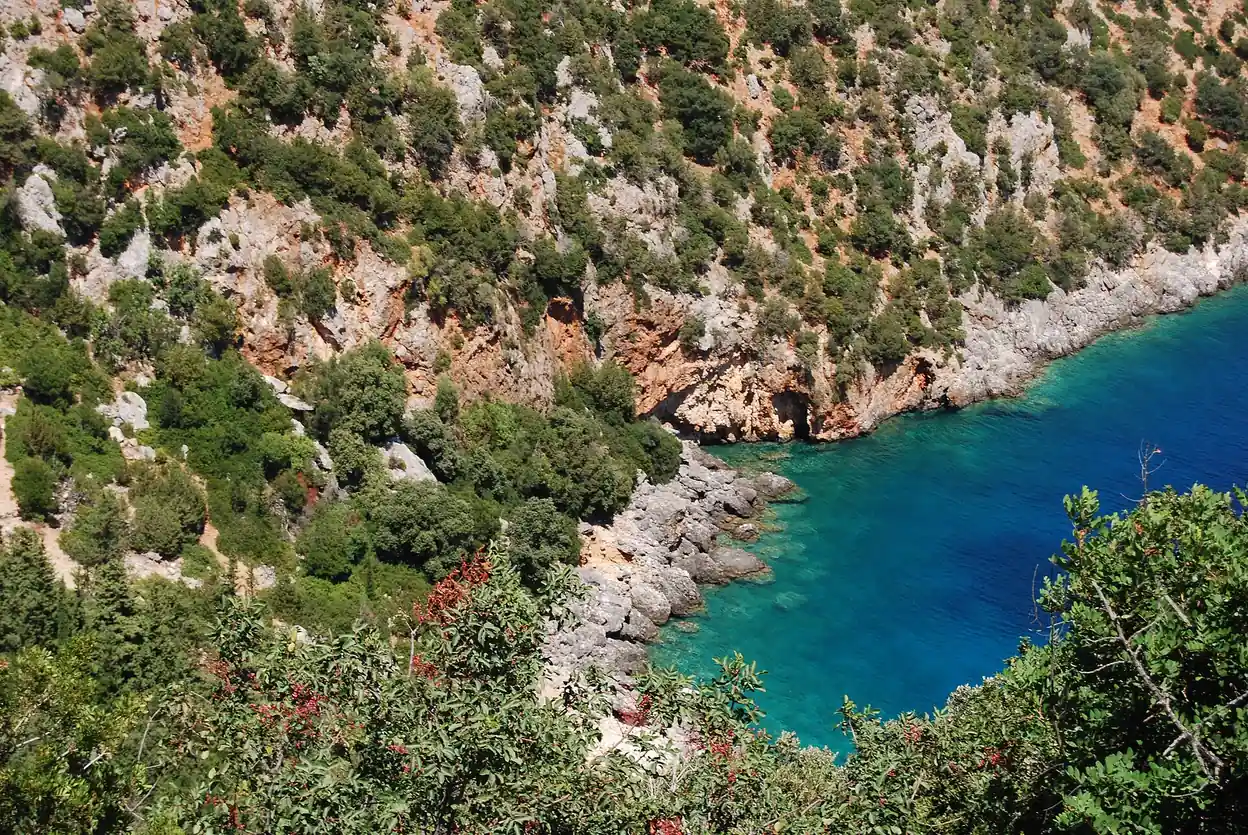
Kefalonia's two coasts behave nothing like each other, and the difference decides whether you swim or just look. The east coast around Sami and Antisamos is calmer and easier to swim from than the exposed west coast, and the reason is the land itself: the bay sits under hills that take the wind off the water and keep it flat and clear.
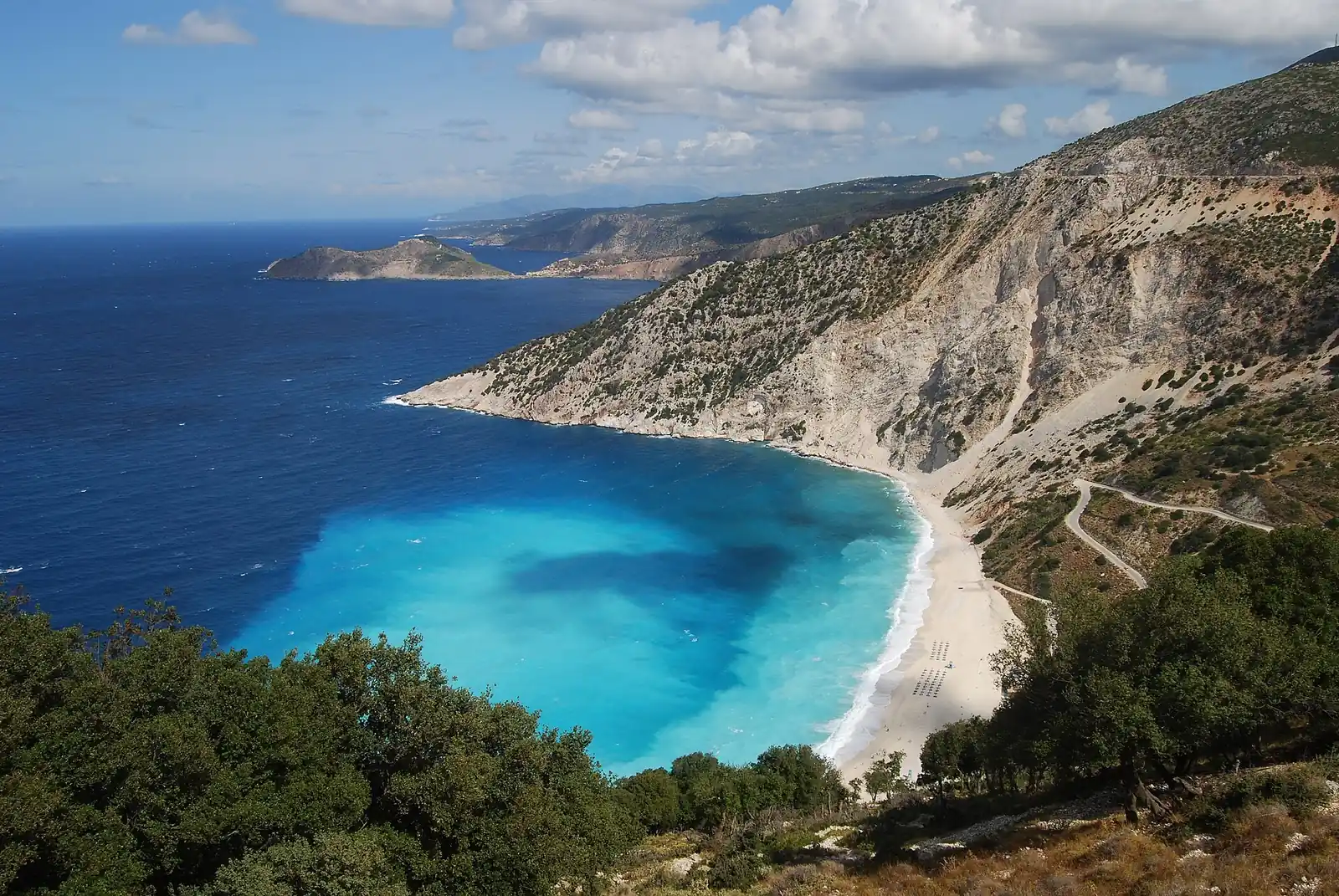
The west is the opposite proposition. Myrtos is the island's famous photograph, and it earns that reputation, but its seabed falls away fast — the water reaches over head height within about five metres of the shore. That is wonderful if you want to swim out into deep water and a poor fit if you want to stand waist-deep watching children paddle.
So the practical rule for a cave day is simple. If the swim is the point, go east. If the photograph is the point, go west, and plan to be in the water only as far as you are comfortable. Either coast works in the same afternoon as Melissani; only one of them works as a relaxed swim.
What the beach is actually like
Antisamos is a long pebble bay with hills behind it and clear water in front. Pebble is the norm on this island rather than the exception: most Kefalonia beaches carry white pebble or a sand-and-pebble mix, and the fully sandy stretches are concentrated in the south and south-west, at Xi, Makris Gialos, Platis Gialos, Skala and Lourdas. Arriving expecting Caribbean sand is the single most common reason people are disappointed, and arriving with thin-soled shoes is the most common reason they limp.
What the bay does have is water clarity and shelter, and those are the two things that make a swim pleasant rather than merely photogenic. The hills block the prevailing wind, so the surface stays flat where a more open bay would be choppy, and flat water is what you want for snorkelling, for children, and for the sort of afternoon where the swimming happens slowly on and off over three hours rather than in one determined plunge.
⚠️ Read this before you lay your towel down
- It is pebble, not sand. Water shoes or closed sandals make the difference between a lovely afternoon and an uncomfortable one — for the walk in, the walk back and the first metre of water.
- The water deepens steadily. There is no long shallow shelf. If you are with anyone who is not a confident swimmer, stay near the waterline rather than wading out to chat.
- No bus goes there. Antisamos has no public transport, so a plan that assumes one falls apart at the roadside.
- Bring what you need. Treat it as a beach day you are provisioning yourself, not a resort.
Getting there without a car
Kefalonia's public transport is thin compared with most Greek islands, and its best-known stretches of coast are thinner still: Antisamos, Myrtos, Assos and Petani all have no public transport at all. That single fact decides how a lot of people see this beach. If you have a car, Antisamos is an easy addition to a cave morning. If you do not, the beach needs either a taxi or a tour — there is no third option to fall back on.
Two verified tour products include Antisamos, and they are not equivalent. Avgerinos Travel Experience, based in Sami, runs a Thursday group excursion covering Melissani, Drogarati and Antisamos at €45 per person, with cave entrance fees not included — so add €10 for Melissani and €4 for Drogarati on showing that ticket — €14 in total, or €16 at full price. Adventure Kefalonia runs a ten-hour full-day sightseeing tour (Melissani, Antisamos, Myrtos, Assos and Fiskardo) at €420 for one or two people plus €30 for each extra person, and its entrance fees are not included either. Both are priced per person or per group rather than per seat in a coach, which is worth knowing before you compare them with anything else.
📏 How far is it from the cave?
You will see Antisamos quoted at 3 km, 4 km, 6 km and 8 km from the caves, and at both 12 and 15 minutes' drive — including on our own pages, which have carried all of those at different times. No official source publishes the distance from Melissani to Antisamos, so we are not going to invent one. The checkable facts are these: Antisamos is on the east coast near Sami, Melissani sits at Karavomylos about 2 km from Sami, and no bus serves the beach. If the exact figure matters to your day, ask your hotel or the operator you book with.
Pairing Antisamos with Melissani Cave
The shape of the day that works is unglamorous and effective: caves first, beach second. Both caves — Melissani and Drogarati — are a few minutes apart on the Sami side of the island, and Melissani's whole appeal is sunlight dropping through the collapsed roof onto the lake. Independent guides put the strongest light at roughly 11:00 to 14:00 on a clear day, in the late spring to late summer months, and describe it as weather-dependent rather than guaranteed. An overcast morning does not lose you the cave; it does lose you the colour.
So swim after. By the time you have queued, taken the boat and eaten in Sami, the afternoon is yours, the sea is at its warmest, and the beach needs no ticket. The one thing to check before you set out is the cave schedule: both caves run to a timetable the Municipality of Sami sets and announces in batches rather than a fixed annual routine. The schedule in force from 3 July 2026 has them open daily from 09:00 to 18:00, with entry closing 30 minutes before the published closing time in every municipal timetable so far.
🎫 What the cave half of the day costs
- Melissani Cave: €10 adult; €5 reduced (children 6–18, students, visitors over 65, multi-child families); free for children under 6, disabled visitors, unemployed visitors and permanent residents of the Municipality of Sami.
- Drogarati Cave: €6 adult; €3 reduced; €4 for an adult who shows a Melissani ticket; €9 each for groups of 20 or more.
- Both caves: no combined ticket is sold; an adult who shows a Melissani ticket pays €4 at Drogarati, so the pair costs €14 instead of €16.
- Validity: the €4 Drogarati rate has no published time window, so plan to use it on the same day as your Melissani visit.
- On the day: expect a queue. Visitor reviews from summer 2026 describe typical waits of 25 to 45 minutes and waits of up to around two hours between midday and 14:00 in July. Those are visitor reports, not an official count, and no operator publishes a queue guarantee.
Antisamos or Myrtos?
This is the decision people actually arrive with, and it comes down to what you want from the water rather than which beach is better. They are on opposite coasts and they are not substitutes.
| Antisamos (east coast) | Myrtos (west coast) | |
|---|---|---|
| Conditions | Sheltered — hills take the wind off the water, which stays flat and clear | Exposed — the island's drama beach, a long pebble curve under cliffs |
| The water | Deepens steadily off the stones | Falls away fast; over head height within about five metres of the shore |
| Getting there | No bus service | No bus service |
| Best for | A relaxed swim, less confident swimmers, an afternoon after the caves | The photograph, and swimming straight out into deep water |
| Paired with | Melissani and Drogarati — the same side of the island | Assos, about 8 km north, and the caves before that |
One logistical note if you pick the west. Fuel is sparse on Kefalonia's west and peninsula roads: there is no practical pump on the west-coast road between Argostoli and Fiskardo, and stations thin out fast once you leave Argostoli. Start any west-coast run with a full tank, and treat the caves-then-Assos-then-Myrtos day as a west run rather than something you invent fuel for halfway.
When to come
Late May, June, September and the first half of October give you warm water, working tavernas and a manageable cave queue. The sea stays inviting for swimming well into October — around 22°C in the first half of the month, which is comfortable rather than bracing. The queue reports we have come from July, which tells you what high summer at Melissani looks like.
Between November and March the calculation changes, and not because the beach stops existing. The cave schedule is the variable: the Municipality of Sami had not published winter 2026–27 hours when we last checked, and it announces each timetable separately rather than running a fixed annual routine. Check the municipality's own pages or call the cave on +30 26740 22997 before building a winter day around it, then decide about the beach on the weather rather than the calendar.
❓ Frequently asked questions
Is Antisamos Beach good for swimming?
Yes — local guides call it the calmest proper swim on the island, and the hills behind the bay are what keep the water flat and clear. Plan for pebbles underfoot and for water that deepens steadily rather than staying shallow.
Is there a bus to Antisamos?
No. Antisamos has no public transport at all, along with Myrtos, Assos and Petani. Drive, take a taxi, or book a tour that includes a beach stop — those are the only three ways in.
Is Antisamos sandy?
No, it is pebble and shingle. Most Kefalonia beaches are white pebble or a sand-and-pebble mix; the genuinely sandy ones are mostly in the south and south-west of the island.
Can I do Melissani Cave and Antisamos in one day?
Yes, and it is the standard shape of a cave day: caves in the morning, beach in the afternoon, with Melissani at €10 and Drogarati at €4 on showing that ticket. Avgerinos Travel's Thursday excursion from Sami already pairs Melissani, Drogarati and Antisamos at €45 per person, with cave entry fees not included.
How far is Antisamos from the cave?
No official source publishes the figure, and the guides that do publish one disagree — 3 km, 4 km, 6 km and 8 km all appear, along with 12 and 15 minutes. Antisamos is on the east coast near Sami, on the same side of the island as both caves, and it has no bus service.
🔗 Plan the cave day
- Melissani, Drogarati and a beach in one day — the timed version of this trip, with the ticket arithmetic
- Melissani cave tours compared — which operators price per group, per person, and who includes the cave entry
- Myrtos Beach — the west-coast alternative, and how it differs
- Kefalonia beaches near the cave — the wider beach picture around Sami
- Tickets and prices — every municipal ticket category, including reduced and free entry
- Getting to Melissani Cave — driving, parking and the distances from Argostoli and Sami
- Sami village guide — where lunch happens before the beach
- Melissani in winter and off-season — how the cave schedule actually works outside summer